

This post may contain affiliate links. Please read our disclosure policy.
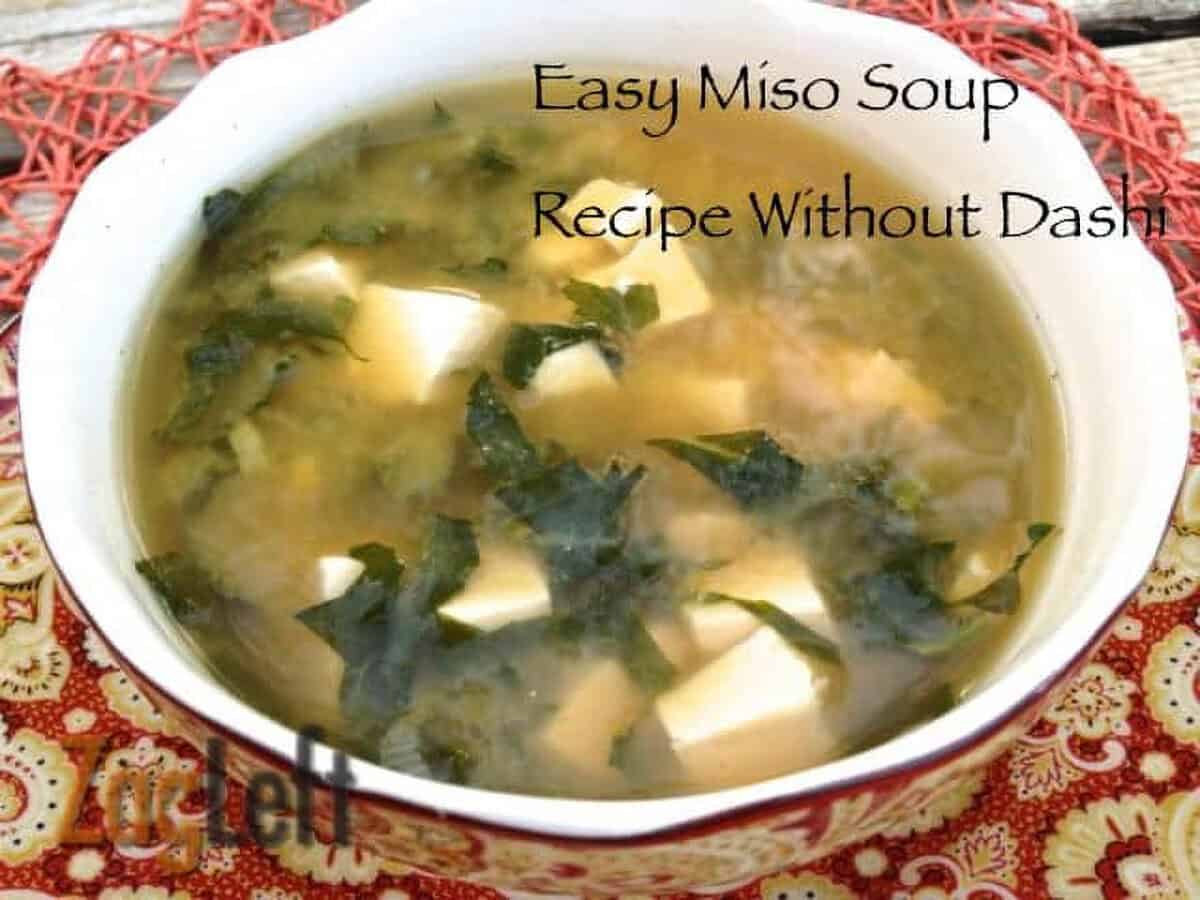
This easy miso soup without dashi is light and deeply savory, ready in 15 minutes with miso, tofu, and tender greens you simmer in vegetable broth.
Quick Look
- Prep Time: 5 minutes
- Cook Time: 10 minutes
- Total Time: 15 minutes
- Equipment: 2-quart saucepan
- Cook Method: Stovetop
- Servings: 6
- Difficulty: Easy
- Flavor Profile: Light and savory with a gentle miso saltiness, plus tender tofu and greens in a warm broth.
Just 5 ingredients and one pot, with no dashi on the list.
Why You’ll Love This Miso Soup Without Dashi
There’s a bowl of miso soup I make when I want something warm and savory without much fuss, and this is it. It takes five ingredients, one pot, and about 15 minutes, and there’s no dashi to hunt down.
I first made this years ago, when I couldn’t find dashi anywhere near me. Dashi is the Japanese stock that gives traditional miso soup its savory base, usually made from kombu and dried bonito. I still wanted miso soup, so I built this recipe around vegetable broth instead, which keeps in the pantry and gives the soup its own savory base with no special shopping trip. For the greens, I use kale in place of the kombu you’d find in a traditional recipe. It holds up in the hot broth and adds a fresh, leafy bite. Miso is a fermented soybean paste, and too much heat dulls it, so I stir it in at the very end, off the heat, so the miso flavor stays sharp.
This is an everyday soup, made from easy grocery and pantry items with nothing you’ll have to track down. Ladle it into a bowl, add a few extra green onions on top, and you’ve got a warm starter or a light lunch in about the time it takes to boil the broth.
If you’re looking for more soup recipes, try my borscht, broccoli cheddar soup, or roasted red pepper and butternut squash soup next.
Ingredient Notes
Here’s what goes into this miso soup and the job each ingredient does. You’ll find the exact amounts in the recipe card below.
Miso paste: Miso paste is the key ingredient, a fermented soybean paste that gives the soup its salty, savory depth. It comes in a few types. White miso (shiro) is the mildest and slightly sweet, which makes it the easiest to work with. Yellow miso (shinshu) is a step deeper and still mellow. Red miso (aka) is bold and salty, so use a little less of it and taste as you go. The best miso is the one you like best, but if you’re new to it, white is the most flexible place to start. Look for it in the refrigerated section of most grocery stores and any Asian market. It keeps for months in the fridge, so one tub lasts a long time and works in dressings and marinades too.
Vegetable broth: Vegetable broth is the base of this soup and what stands in for dashi. Use a low-sodium broth here, since miso adds plenty of salt on its own. Starting with a low-sodium base lets you taste and adjust the salt at the very end.
Firm tofu: Firm tofu adds protein and substance, and because it’s firm, the cubes keep their shape in the hot broth instead of breaking apart. Drain it before you dice it. Silken tofu is the more traditional choice and gives you softer, more delicate pieces, so use it if you prefer that.
Kale: Kale is my swap for kombu, the dried kelp used in traditional miso soup. It stays firm and green as it simmers and gives the soup a little chew. For the classic seaweed flavor, use wakame instead, the soft seaweed you get in restaurant miso soup, which rehydrates right in the bowl. Spinach works too, though it wilts down much faster.
Green onions: Green onions add a mild, fresh onion flavor and a little color. Slice them thin and save a few to scatter over the top just before serving.

Recipe Variations
This miso soup without dashi is easy to adjust. Here are a few changes worth trying.
Miso Soup With Mushrooms
Stir in 1 cup of sliced shiitake or cremini mushrooms with the greens and simmer until tender. Mushrooms add a deep, savory flavor and bring back some of the umami that dashi would normally give the soup.
Miso Soup Without Tofu
To make this miso soup without tofu, leave it out and add 1 cup of sliced mushrooms or ½ cup of shelled edamame in its place. The soup still has plenty of flavor from the miso, broth, and greens.
Miso Soup With Dashi
If dashi is easy to find where you shop, swap the 4 cups of vegetable broth for 4 cups of dashi. It gives the soup the classic seafood-and-kelp flavor of restaurant miso soup.
Miso Soup From Paste With Water
For the simplest version, use 4 cups of water in place of the broth and stir a teaspoon of soy sauce in with the miso for extra savory flavor. This is close to how miso soup is made straight from miso paste, and it’s handy when you’re out of broth.
How To Make Miso Soup Without Dashi
Here’s how to make miso soup without dashi on the stovetop in about 15 minutes. You’ll find the full ingredient amounts in the recipe card below.
- Pour the vegetable broth into a medium saucepan and bring it to a boil over medium-high heat. Reduce the heat to low so the broth settles into a gentle simmer, with just a few small bubbles breaking the surface.
- Add the sliced green onions and chopped kale. Simmer for about 5 minutes, until the kale softens and turns a deeper green.
- Add the diced tofu and simmer for another 5 minutes, until the cubes are warmed all the way through.
- Take the saucepan off the heat. Spoon the miso paste into a small bowl, add about ½ cup of the hot broth from the pot, and whisk until the miso is smooth with no lumps.
- Pour the dissolved miso back into the saucepan and stir gently. Taste, add salt only if it needs it, and serve right away.
Expert Tips
Add the miso off the heat. Turn off the burner before you stir in the miso. Miso is a live, fermented paste, and boiling it dulls its flavor and kills the beneficial cultures. Stirred in off the heat, it keeps its bright, savory taste.
Whisk the miso smooth first. Miso won’t dissolve if you drop it straight into the pot, it just clumps. Whisk it with a little hot broth in a small bowl first, or press it through a fine-mesh sieve into the soup.
Taste before you add salt. Miso is salty on its own, and so is most broth. Wait until the miso is stirred in, then taste, and add salt only if it needs it.
Troubleshooting
If your miso soup isn’t turning out quite right, here’s how to fix common issues.
Why is my miso soup too salty?
Start with low-sodium broth. Miso brands and broths vary a lot in how much salt they carry, so the same recipe can taste saltier depending on what you use. Use a low-sodium vegetable broth, stir the miso in at the end, and taste before adding any extra salt. If a batch still runs salty, thin it with a little more broth or water.n more miso at the end only if it needs it.
How do I make my miso soup more savory?
Add mushrooms or a splash of soy sauce. For a deeper, more savory bowl, simmer a few sliced shiitake or cremini mushrooms in the broth, or stir in a little soy sauce with the miso. Both add umami and give the soup more depth.
Why is my miso grainy or clumpy?
Dissolve it in broth first. Miso dropped straight into the pot clumps instead of blending in. Spoon it into a small bowl, whisk in about ½ cup of hot broth until smooth, then stir that back into the soup. A fine-mesh sieve works too.
Frequently Asked Questions
Yes. You can make miso soup without dashi by using vegetable broth as the base instead. Miso paste carries most of the flavor, so the soup still tastes savory even without the traditional stock.
Use vegetable broth for the easiest swap. Other options that add savory, umami flavor include a quick broth steeped from kombu or dried shiitake mushrooms, store-bought mushroom broth, miso paste that already has dashi mixed in, or a small splash of soy sauce or fish sauce. Vegetable broth is the simplest and is what this recipe uses.
No. Dashi is traditional, but it isn’t required. It adds a savory, seafood-and-kelp depth, and you can get a savory base instead from vegetable broth, a kombu or mushroom steep, or miso paste on its own.
Yes, this miso soup is vegan and vegetarian. It’s made with vegetable broth, tofu, kale, green onions, and miso paste, with no fish-based dashi. Check the label on your miso paste, since some kinds have dashi mixed in.
White miso (shiro) is the best choice for a light, everyday miso soup. It’s mild and slightly sweet. Yellow miso is a little deeper, and red miso is bold and salty, so use less of it.
Store miso soup in an airtight container in the refrigerator for up to 3 days. For the best texture, keep the broth separate from the tofu and greens, then reheat gently.
Freezing miso soup isn’t recommended. The tofu turns spongy and the miso loses its flavor after freezing and reheating. It’s quick enough to make fresh whenever you want a bowl.
Easy Miso Soup without Dashi
Equipment
- 2 quart saucepan
Ingredients
- 4 cups low-sodium vegetable broth
- 3 green onions – thinly sliced
- 2 cups kale – chopped
- 2 cups diced firm tofu
- 3 tablespoons miso paste
Instructions
- Pour 4 cups vegetable broth into a medium saucepan and bring to a boil over medium-high heat.
- Reduce the heat to low and let the broth settle into a gentle simmer, with just a few small bubbles breaking the surface.
- Add the sliced green onions and chopped kale. Simmer for 5 minutes, until the kale softens and turns a deeper green.
- Add the diced tofu and simmer for 5 minutes more, until the cubes are heated through.
- Remove the saucepan from the heat.
- Spoon the miso paste into a small bowl, add about ½ cup of the hot broth, and whisk until smooth with no lumps.
- Pour the dissolved miso into the saucepan and stir gently to combine.
- Taste and add salt only if needed, then ladle into bowls and serve.

Like I said, I love your recipe, it’s easy and delicious. I make just a small modification. Instead of the kale, I use the dried seaweed from the sheets used for making sushi, which is easy to find in most cities. My 9 year old daughter likes sushi, which we make at home, but she likes the rolls a bit smaller, as she finds the full sized rolls too big for her mouth. So I break a quarter or so off the sheets when I make sushi for her, and use the quarter sheets broken up in the soup. The Japanese use seaweed in the soup, but I don’t think they use the seaweed sheets, I think it is a different form, but the seaweed from the sheets works very well. Anyone with children who love sushi should try the smaller rolls, they are easier for them to eat. We used to buy it in the supermarket, but it is expensive, and so easy to make at home. After a few times of making it, the homemade sushi is nearly as good as from the supermarket, and a small fraction of the price. And the leftovers of the sheets from making sushi go great in the soup. Thanks again for you lovely and helpful blog!!!!!!
Thank you for sharing your idea of using the dried seaweed sheets, I will have to try using those. I’ve only made sushi once at home and I had so much fun making it, you’ve inspired me to give it a go again. Have a great day!
I had the same problem trying to find Dashi in my city and was searching for a replacement when I found your recipe on the web. It is really easy and very delicious, both me and my wife really enjoyed the results. I have definitely added your recipe to my book. Thanks for sharing your recipe with us !!!!!!!!
I’m so happy you liked the recipe! Thank you so much for letting me know.
I just found this recipe on my search for variations to miso soup. Like another reader, I could not find Dashi to make Miso Soup. Then I learned Dashi is made with a combination of water, Bonita flakes and Kombu (dried kelp). I followed Joanie's recipe using my Dashi instead of the vegetable broth. It was yummy. Next time I'll make Joanie's recipe with vegetable broth for those not fond of sea vegetables. Thank you Joanie
Soup came out great. Because we’re a large family, I tripled the quantity of broth and veggies but I only added in the miso paste as people were ready to eat the soup (so I did about 4 cups of broth at a time mixed with the miso). I heated the veggies and broth and then added the miso as needed. Thanks for a great easy recipe.
I’m so glad you enjoyed the recipe, Sharon. Thanks so much for letting me know. Have a great week!
Just wondering, how many servings does the recipe above make? 🙂 Thank you!
I would say this would serve 2-3 people. Thanks so much for reaching out. I’d love to hear how it turned out for you.
Hi, I tried out the recipe and I felt it was too salty. Added only 2 tbsp of the miso and it was already too much. Next time I might omit the veggie stock and start with water instead. Nonetheless, thank you for giving me the basics for a miso soup! 🙂
Definitely what I am finding for! I love Miso soup but the dashi is quite a problem for me.
Will give it a try tonight!
Great, Aeron! Hope you enjoy the recipe.
I tried with red miso, not very good, need to try something else.
trying it tonight. thanks for posting.
Wow. This is so easy to make. I love miso soup. I’m going to give this a try. Thanks.